Four federal dates
LLC Quarterly Taxes, four dates on one voucher
Steven Palmieri, a Tax CFO and the Entrepreneur's CFO, keeps the books, sets payroll up with the provider you already pay, and prepares the return once the month has closed.

Name the next voucher.
Say which election is on file, and which month you trust.
You will be talking to the Steven Palmieri practice.
The Tax CFO way
The count is the voucher already sent. The decision is the next date.
An accountant totals the estimates that already left the account. A Tax CFO chooses whose name is on the next voucher, and whether the month under it is closed enough to trust.

Four elections
A disregarded company, a partnership, an S election, and a C corporation do not share one voucher.
Click to read the four elections ›Tap to read the four elections ›

Whose name
The payment has to land on the account the election already chose.
Click to see whose name ›Tap to see whose name ›
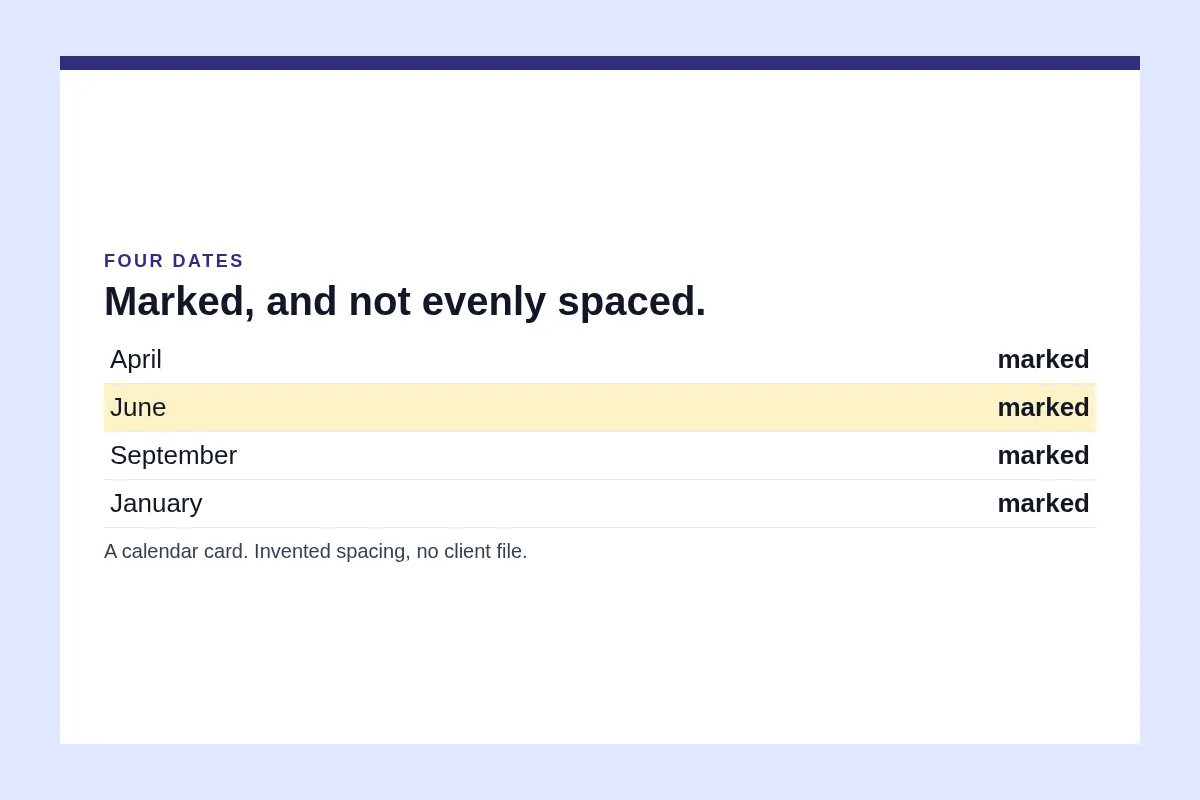
Uneven dates
April, June, September, and January are the dates owners expect, and they are not evenly spaced.
Click to see the spacing ›Tap to see the spacing ›
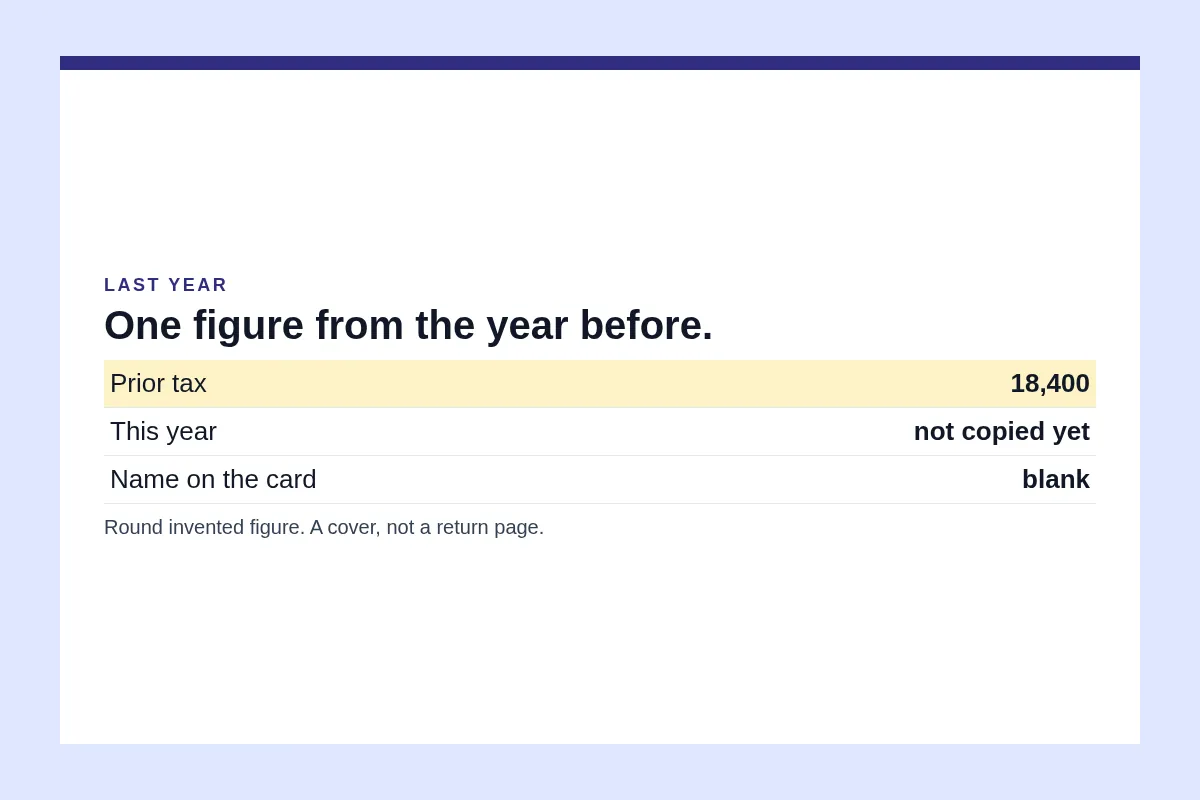
Last year's tax
A payment based on last year's tax can keep a surprise from becoming a penalty.
Click to read the harbor ›Tap to read the harbor ›
A closed month
An open month is a guess. A closed month is a number you can stand behind.
Click to see the close ›Tap to see the close ›
A first year
With no prior return, the voucher comes from the months you have actually closed.
Click to read year one ›Tap to read year one ›
Six voucher troubles
Open one card. The name on the payment follows the election.
1The owner's voucher
A one-owner company with no election on file
The profit lands on the owner's return, so the estimate payment carries the owner's name.
2The partners' voucher
Two or more owners and a partnership return
The company return reports the split. Each owner still pays an estimate under their own name.
3After an S election
Wages first, then the remaining profit
Pay runs through a provider. The leftover profit still often needs an estimate in the owner's name.
4The company voucher
A C corporation on a calendar year
The company can owe its own estimate, and the December date replaces the January date owners expect.
5Last year's tax
A return already filed
Paying from last year's tax can keep a thin year from turning into a penalty, when that harbor fits.
6No prior return
A shop in its first year
There is nothing to copy. The voucher waits on months that have already been closed to the bank.
Steven Palmieri.
Four unequal bars stand in for a portrait. The titles beside them are Tax CFO and the Entrepreneur's CFO, and the work under those titles is the books, payroll setup with the provider you already use, and the return the voucher belongs on.
Why the four dates are not equal
Owners often picture a voucher every three months, the way rent works. The federal calendar for a person does not. The usual dates fall in the middle of April, the middle of June, the middle of September, and the middle of January. June comes only two months after April. January comes four months after September. A shop that drafts an equal amount on the first of each quarter will be early once and late once.
A C corporation on a calendar year often swaps January for December. That one swap is why two owners with the same busy summer can owe on different days. One pays as a person. The other pays as the company. The election picks the calendar. The feeling of the year does not.
We write the next date beside the election that chose it. The list is an order, not a bill. If the election is still a question, the date is a question too, and we say that before anyone drafts a payment.
The name on the payment
A voucher pays into one account at the IRS. The account belongs to the owner, to a partner, or to the company. Sending the right dollars to the wrong account feels like paying. The transcript later says the account that owed the money received nothing.
A disregarded company usually means the owner's account. A partnership usually means each partner's account, after the company return shows the split. An S election usually means wages through a provider, then an estimate still in the owner's name for what the wages did not cover. A C corporation can mean the company's own account.
We ask which election is on file before we ask for an amount. An acceptance page that is not in the file leaves the payee blank. We do not invent an election so a voucher can look finished.
A month has to close first
The voucher is only as honest as the month under it. When the bank and the books still disagree, the profit for that stretch is a rumor. We close the month to the bank, then we read the profit, then we talk about a payment.
A receipt in a drawer and a deposit on the statement are the same sale only after someone matches them. A payroll draft is a wage only after the provider's report lands in the books. Until those matches exist, a quarterly number is a wish.
The relief people describe is knowing the voucher came from a month they would sign. We would rather move a date than defend a number built on an open feed.
What the first call is for
Bring the company name, the election if you know it, and the last month you trust. Last year's total tax helps when a return exists. A first year can arrive with none of that, and we still start.
The call names the calendar you are on and whether the months are open. It does not quote a fee and it does not make the company a client. Work after the call is a written scope. When the voucher can wait, we say that and the call ends there.
Payroll on that call means setup with the provider you already pay. We do not run payday. A signature on financial statements, when a lender wants one, is outside the work, and we say that on the call.
Tell us the election.
The next voucher can wait until we know whose name belongs on it.
You will be talking to the Steven Palmieri practice.